Lobby Trade: How Mayfair's Hotel Operators Are Reshaping the Bond Street Retail Lease
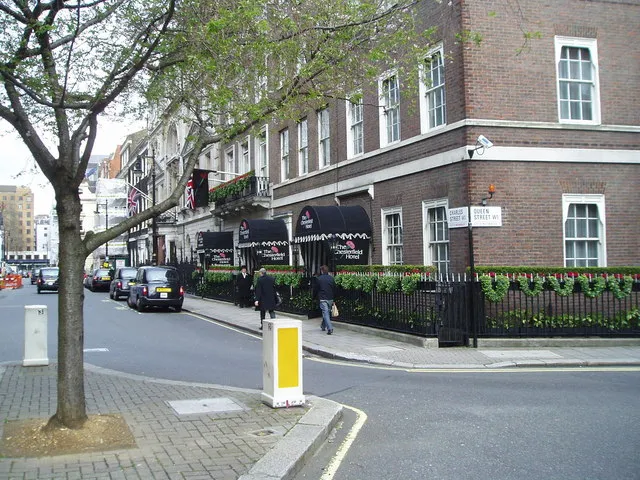
Photo: Peter Holmes, CC BY-SA 2.0, via Wikimedia Commons
The traditional boundary between a Mayfair hotel lobby and a Bond Street retail floor is becoming harder to police. Hotel operators are curating shopping arcades, private client suites and residents' lounges. Landlords are adding concierge desks and appointment spaces. The affluent customer is being courted in both settings, and the lease is starting to reflect it.
From arcade to appointment suite
Hotels have long hosted concessions: a jeweller in a lobby vitrine, a florist by the entrance, a watch brand in a corridor. The change is one of degree and intent. Newer hotel-backed retail spaces in Mayfair are closer to curated arcades than casual concessions, with a tenant mix chosen to complement the hotel's own positioning. Alongside them, private client suites offer appointment-only settings for high-value purchases, and residents' lounges provide a residential-style amenity for guests and members.
For Bond Street, this matters because it gives luxury brands an alternative to the traditional shopfront. A private client suite can host a watch presentation, a made-to-measure consultation or a high-jewellery viewing without the overhead of a full trading floor. A hotel arcade can offer security, valet, food and beverage, and a captive audience. The shopfront is no longer only a window onto the street; it can be a door off a lobby.
What hotels bring to footfall
The footfall argument is straightforward. Bond Street offers public footfall: democratic, weather-dependent and increasingly event-led. A hotel offers qualified footfall: guests who have already chosen to stay in Mayfair, often at high room rates, and who are primed to spend. Concierge recommendations, in-room technology and hotel dining create repeated touchpoints that a street-facing retailer cannot replicate alone.
But qualified footfall is not a substitute for volume. A hotel-backed retail unit may see fewer passers-by than a New Bond Street window, but a higher conversion rate and a larger average transaction. That changes the economics of the unit. It also changes the lease. Hotel operators and landlords are experimenting with shorter terms, turnover-linked rents and service charges that include hotel services. The occupier is not simply renting space; it is buying into an ecosystem.
The lease behind the lobby
The legal structures are still catching up with the trend. A hotel operator may act as master tenant, subletting retail space to brands. A landlord may grant a lease to the hotel and a licence to the retailer. Service charges may include security, valet, cleaning and marketing. The result can be a more complex occupational stack than a conventional Bond Street lease, with different incentives for each party.
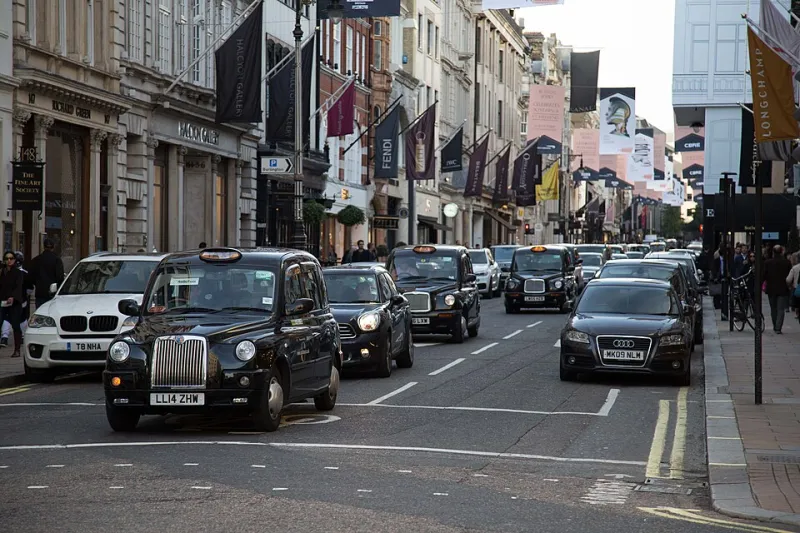
Landlords are now competing with hotel operators for the same affluent customer. That competition is not only about rent. It is about who controls the journey: the hotel that can offer a seamless experience from suite to spa to shopping, or the street that can offer discovery, scale and the serendipity of a flagship row. Bond Street's answer has been to add amenity: concierge services, seating, events, better public realm. The hotel's answer has been to internalise the shopping journey.
Valuation and the hospitality premium
For investors, the convergence raises valuation questions. A retail asset with a hotel adjacency or a hospitality component may support a lower yield because it offers income diversification and a stronger trading narrative. But it also introduces operator risk. A hotel's credit, management contract and brand standards matter to the retail tenants. If the hotel changes hands or repositions, the arcade's tenant mix may need to change with it.
Valuers are increasingly looking at the whole asset rather than the retail unit in isolation. The service charge, the trading covenant and the lease structure all affect net operating income. A hotel-backed retail unit may have a higher rent per square foot but a shorter lease and a more complex service charge. That can be attractive to a brand seeking flexibility and less attractive to an investor seeking long income.
The risk of a sealed ecosystem
The risk is that the lobby becomes a sealed ecosystem. If hotels capture a greater share of affluent spend inside their own walls, the street loses the discovery that makes Bond Street distinctive. The counter-argument is that hotels and streets feed each other: a guest who visits a hotel arcade may still walk to a flagship, and a shopper who visits Bond Street may book a hotel suite for a private viewing.
The outcome will depend on lease design and landlord strategy. Bond Street's landlords cannot simply compete on rent. They need to compete on experience, flexibility and service. The hotel lobby is not replacing the shopfront. It is becoming another shopfront, and the street's leasing model is being rewritten around it.