The Short Lease as Long Bet: What Bond Street's Interim Tenants Reveal About Demand

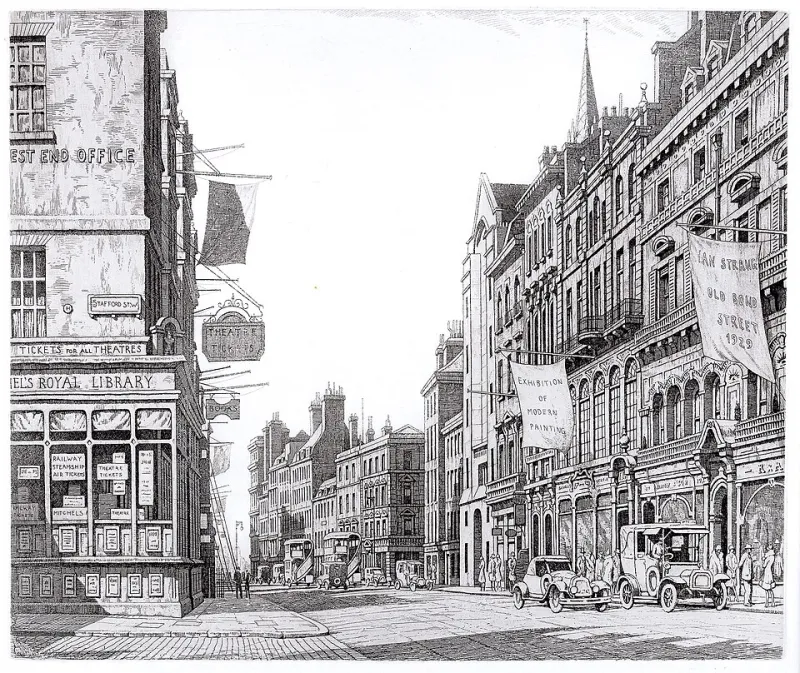
Photo: Humphrey Bolton , CC BY-SA 2.0, via Wikimedia Commons
Bond Street has long been read through its windows. A retailer's frontage, the confidence of its seasonal display, the quality of the lighting after dark: these have been the conventional shorthand for how the district is faring. In 2026, however, a growing share of those windows belongs to occupiers who will have gone before the Christmas lights are switched off — and that, counterintuitively, is emerging as one of the more dependable signals of how the street is really performing.
Temporary occupation is hardly a novelty in Mayfair. What has changed is its purpose. Where a short let was once a landlord's consolation prize while a permanent deal was negotiated, it is increasingly treated by owners, brand strategists and investment advisers as a piece of primary research: a cheap, fast-turnaround experiment that tests footfall, price tolerance and, above all, whether a brand's current momentum survives contact with a demanding West End audience.
A market measured in weeks
The single word 'pop-up' conceals at least three distinct products. The first is promotional: a few days, often tied to a product launch, with a fit-out designed to travel. The second is the gallery-style residency, running six to twelve weeks, curated with something close to museum discipline and frequently art-adjacent in tone. The third — and the one that matters most to underwriters — is the bridging let: three to nine months, near-permanent specification, flexible terms, and an option to convert to a conventional lease if the numbers work.
Geographically, the activity clusters where one would expect. New Bond Street and Old Bond Street remain the shop window, but the quieter stretches of Brook Street, Grafton Street and Bruton Street, together with the approaches to Hanover Square and the Elizabeth line entrances, carry a disproportionate share of the interim deals. Rents quoted per week look startling; annualised, they rarely are.
What landlords actually learn
The data dividend is the point. A covenant-strength tenant on a fifteen-year lease tells a landlord almost nothing until the first rent review. An eight-week occupier, by contrast, generates footfall counts, dwell times, conversion rates and average transaction values within a fortnight — evidence that can be placed before an investment committee long before a permanent letting is agreed.
Advisers involved in these transactions describe a second, subtler benefit: the short let functions as a low-stakes introduction. A European label testing London for the first time can establish a trading history, a staffing base and a relationship with the freeholder without committing capital to a decade-long liability. When the permanent unit a few doors along becomes available, the conversation is already well advanced.
The rent tolerance test
Headline pricing on interim space is, by common consent, extraordinary on a per-week basis, and the temptation is to dismiss it as a novelty premium. That would be a mistake. What the short let reveals is a brand's willingness to pay — and a tenant prepared to absorb a steep weekly rate for eight weeks is signalling capacity for a longer commitment at a lower, steadier rate.
For landlords, that is underwriting gold. Zone A evidence is scarce on a street where transactions are infrequent and often undisclosed. A sequence of interim lettings, each at a defensible rate, builds a rental narrative that valuers can work with rather than argue about.
The interaction with empty property relief is also well understood in the market. Occupation resets the clock, and a short tenancy can be timed to manage rates exposure across a portfolio without ever appearing to do so.
From signal to underwriting
The link between a three-week lease and a ten-year investment case is less fanciful than it sounds. A fund acquiring a Bond Street block is, in essence, buying a set of assumptions about rental growth, void periods and reversionary potential. Each of those assumptions is softened by visible demand.
A queue for interim space shortens the expected void. A calendar of residencies through the spring suggests a street with cultural as well as commercial pull. And the tenant mix observed at close quarters — which brands are prepared to pay, which are merely curious, which arrive with a launch budget and leave without a sales record — informs the leasing strategy for years to come.
The risk of reading too much
There is a counter-argument, and it deserves a hearing. A cluster of pop-ups can flatter a street that is quietly struggling. Some of the most heavily programmed stretches of central London have, in past cycles, been those where permanent demand was weakest. Continuity of tenure has value: a district composed entirely of itinerant occupiers loses the depth of relationship that carries it through a downturn.
There is a policy dimension, too. Westminster's primary shopping frontages are protected for reasons, and a drift towards tenure measured in weeks rather than years can weaken the case for the very mix that makes Bond Street distinctive. Landlords who lean on interim income to bridge a soft patch should be candid with themselves about which of the two they are doing.
What to watch
The indicator to follow through 2026 is not the number of short lets but their conversion rate — the proportion of interim occupiers that return for a second stint, or graduate to a conventional lease. That figure will say more about the durability of demand than any headline rent, and rather more than the queue of brands hoping for a fortnight in a Bond Street window.
The street's windows have always told a story. Increasingly, the most revealing ones are those that will be repainted in a matter of weeks.