Frontage Economics: The Hidden Media Value of a Bond Street Window
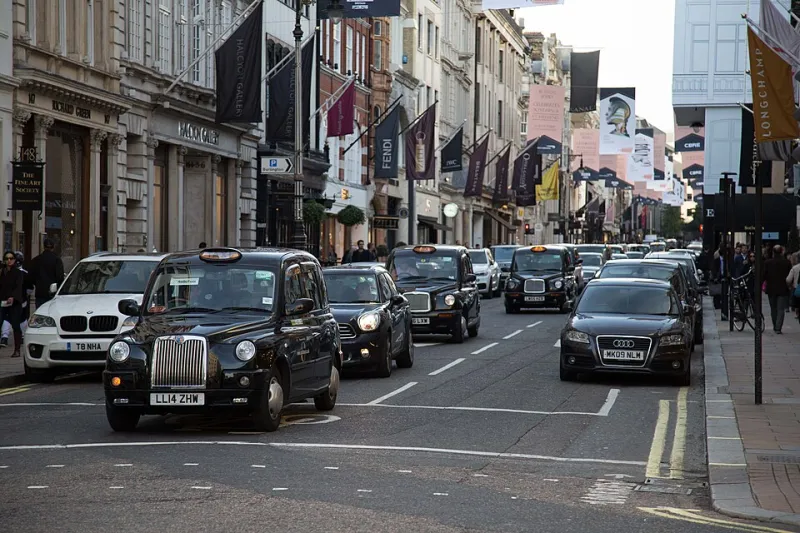
Photo: mazzon888, CC0, via Wikimedia Commons
On Bond Street, the most valuable square footage may no longer be behind the glass. It is the glass itself — and the sightline it controls. For decades, prime retail rents were analysed through Zone A, footfall and turnover. In 2026, a more nuanced metric is emerging: the media value of the facade.
From selling space to selling sightlines
Luxury brands have always treated stores as theatres. The flagship is a stage for product, service and brand ritual. But the economics have shifted. A Bond Street store is now expected to function as a global content studio: every window display is photographed, filmed and circulated far beyond London. The window is the billboard; the doorway is the call to action.
The comparison with out-of-home advertising is imperfect but instructive. A prime digital screen on Piccadilly Lights or Oxford Street commands rates based on impressions, dwell time and audience quality. Bond Street windows are not sold as media in the conventional sense, but the audience is comparable: international shoppers, high-net-worth residents, tourists and press. The difference is that the media cost is embedded in the rent.
On a per-square-metre basis, the annual rent attributable to a prominent window can look less like property and more like sponsorship. Landlords do not publish such calculations, and the market is too opaque for a single benchmark. But the direction is clear. Brands are underwriting frontage as part of marketing budgets, not merely occupancy costs. A flagship that delivers visibility can justify a rent that looks aggressive on pure sales density alone.
The corner premium and the digital shopfront
Corner sites have always commanded a premium. They offer dual aspect, more glass, longer dwell time and, crucially, more angles for photography and social media. In leasing terms, the premium is now less about additional sales area and more about additional audience. A corner window on New Bond Street or Old Bond Street is a piece of London real estate that happens to work as a global display.
Digital shopfronts add another layer. A growing number of brands use screens, projections and interactive displays to create changing facades. The appeal is obvious: a digital window can be refreshed by campaign, by hour or by weather. It can capture attention in a way that static display cannot.
Planning is the constraint. Westminster City Council's advertising policies, listed-building consents and estate management rules limit how far a shopfront can become a billboard. The result is scarcity: consented digital frontage on Bond Street is a valuable and tightly held asset. Landlords with the right consents hold an advantage; those without may find that upgrading a facade is slower and more expensive than expected.
Not every screen is equal. A digital window that merely replays a campaign is a cost. A digital window that changes with the hour, responds to footfall or integrates with a brand's data is a media asset. Landlords are beginning to distinguish between the two when negotiating. The lease may specify content refresh obligations, maintenance standards and even the proportion of time reserved for landlord messaging.
What landlords should price — and what tenants should pay
For landlords, the temptation is to capitalise media value into headline rent. That can work for trophy assets with genuine scarcity. But overpricing frontage risks vacancy, and vacancy on Bond Street is more visible than vacancy elsewhere. An empty window sends a signal to the street, to other tenants and to investors.
The smarter approach is a blended model: base rent for selling space, a premium for visibility, and lease obligations around window presentation, lighting and digital maintenance. Some landlords are using turnover top-ups or marketing contributions to capture upside without setting an unsustainable headline rent. Others are investing directly in facade quality, lighting and consent work, treating the window as an amenity that supports the whole asset.
For tenants, the calculation is more complex than a simple rent-to-sales ratio. The flagship must justify itself across sales, brand equity, press coverage and content. A window that generates a million impressions may be worth more than an extra ten square metres of stockroom. That logic is familiar to luxury groups, but it is now spreading to premium and emerging brands that see Bond Street as a launchpad rather than a pure retail outlet.
For investors, the implication is that prime retail assets need to be underwritten with a media lens. Facade quality, consent status, corner position and digital infrastructure are no longer cosmetic. They are income drivers. A building with poor frontage may trade at a discount not because the sales area is weak, but because the visibility is.
The investment case
None of this means Bond Street is becoming an advertising strip. The street's value remains rooted in scarcity, address and the concentration of luxury demand. But the window has become a distinct asset class within the building. It has its own economics, its own risks and its own lease language.
The most valuable shopfronts will be those that can be monetised twice: once through rent and once through the brand exposure they deliver. That double value is why brands tolerate rents that look stretched on conventional metrics, and why landlords are right to think harder about what a window is actually worth. In 2026, the answer is no longer just the floor area behind it.