Private Capital’s Quiet Coup: Mapping the New Ownership of Bond Street

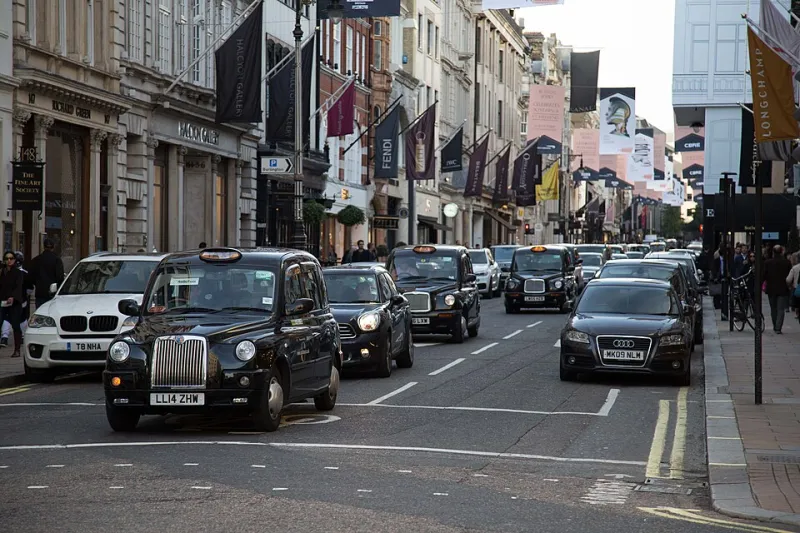
Photo: Paul Pitman, CC BY 2.0, via Wikimedia Commons
The ownership register of Bond Street is changing, but not through a single headline transaction. It is changing through dozens of quieter moves: a long leasehold here, a mixed-use block there, a stake held through a private vehicle rather than a listed fund. By 2026, the street's capital structure looks less like a conventional institutional portfolio and more like a collection of long-dated private holdings.
The buyer profile has changed
For much of the past two decades, prime London retail was a natural home for institutions. Pension funds, sovereign wealth funds and specialist real-estate managers valued Bond Street for its scarcity, its income and its global status. Those buyers have not disappeared, but they are no longer the dominant force at the smaller end of the market.
The new buyers are family offices, private investment companies and high-net-worth individuals. They are often advised by boutique agencies rather than large-format investment banks. They buy with equity, or with modest leverage. They are not driven by quarterly reporting or redemption cycles. And they are willing to accept a lower initial yield in exchange for control, longevity and a tangible asset in the heart of London.
This is not a sudden takeover. It is a gradual transfer. The pace has increased since 2023, as higher debt costs forced some institutional owners to reconsider portfolios and as private capital found itself with liquidity and a long horizon. In 2026, the result is an ownership map that is more fragmented, more private and harder to read from the outside.
Mapping the acquisitions
Publicly available records tell only part of the story. Many Bond Street assets are held through special-purpose vehicles, and beneficial ownership can sit several layers away. Even so, three patterns are visible.
First, private buyers have been active in smaller freehold and long-leasehold lots, often above and behind the retail pitch. These assets are below the threshold that interests large funds but are attractive to a family office seeking income and capital preservation. Lot sizes in the £20m–£75m range have been particularly competitive.
Second, mixed-use buildings have drawn private attention where the retail is a loss leader for the whole asset. A Bond Street address can support office, residential or serviced accommodation above the shop, and private owners are often more willing to manage that complexity directly. They can blend uses, negotiate bespoke leases and take a longer view on refurbishment.
Third, corner sites and buildings with development potential have attracted off-market interest. These are not always traded openly. Some change hands through introductions, joint ventures or forward funding arrangements. The result is that the most significant shifts in ownership may not appear in headline auction results at all.
The names behind these vehicles are diverse: European industrial families, Gulf investors, Asian private offices and British entrepreneurs. What unites them is not geography but mandate. They want prime London retail as a store of value, not as a trading position.
Why family capital likes prime London retail
The attraction is straightforward. Bond Street is a global address with a finite supply of buildings. It offers income from luxury covenants, potential for capital appreciation and a hedge against currency and political risk. For families with diversified international portfolios, London remains a relatively transparent and liquid market for trophy assets.
There is also a psychological dimension. A Bond Street building is visible. It can be visited, photographed and passed to the next generation. That makes it different from a logistics portfolio or a bond allocation. Private capital often values the story as much as the yield.
The current pricing environment reinforces the trend. Higher interest rates have made leveraged institutional buyers more cautious. Private buyers with cash or low leverage can compete without needing the same return. They are not immune to valuation pressure, but they can afford to wait.
Implications for leases and asset management
A change in ownership usually means a change in negotiation style. Institutional landlords often work to clear mandates, standard lease templates and committee approval processes. Private owners can be more flexible, but also more idiosyncratic. Decisions may be taken quickly by a principal, or slowly by a family council.
On Bond Street, lease negotiations are already feeling the difference. Private landlords may accept longer rent-free periods in exchange for stronger covenants or longer terms. They may take a direct interest in tenant mix, shopfront design and the quality of the building's common areas. They may also be less willing to accept a tenant that does not fit their vision of the street, even if the rent is high.
Asset management becomes more hands-on. Family offices often want to control the detail: the lighting, the signage, the facade, the relationship with the tenant. That can be positive for the street, particularly where it leads to investment in heritage buildings and better presentation. But it can also slow decisions and create inconsistency where a single owner holds several units.
The risk to the retail mix
Patient capital is not automatically good or bad for Bond Street. It can support a more curated, less transactional retail mix. Private owners may hold vacant space longer rather than accept a discount rent, and they may favour brands that enhance the building rather than simply pay the most.
But there is a risk. Private ownership can reduce transparency and liquidity. It can make it harder for institutional investors to assemble large holdings. And if too many owners prioritise preservation over adaptation, the street may struggle to respond to changes in luxury retail, such as the shift towards experiential stores, smaller formats and digital integration.
For investors, the implication is that Bond Street is becoming a more relationship-driven market. Access matters. So does patience. The investment case remains strong, but it is no longer simply a matter of buying income and waiting for rental growth. Ownership structure now affects everything from lease terms to exit routes.
The quiet transfer of Bond Street into private hands is therefore more than a curiosity. It is a structural shift in how one of London's most valuable retail streets is owned, managed and priced. In 2026, the question is no longer whether family capital has arrived. It is how much of the street it will eventually control.