Grounds for Optimism: Why Café Leases Are Bond Street’s New Footfall Barometer
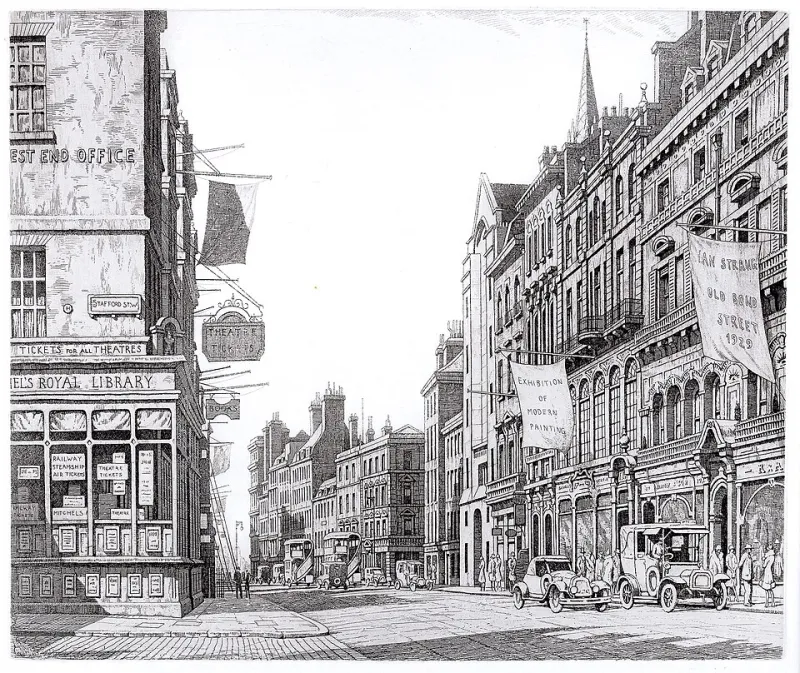
Photo: Ian Strang, Public domain, via Wikimedia Commons
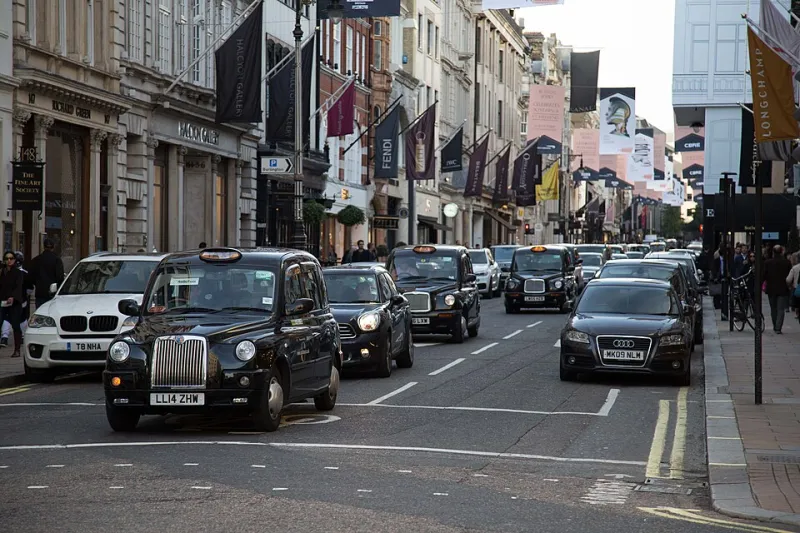
The espresso machine has become an unlikely instrument of prime London analysis. Across New Bond Street, Old Bond Street, South Molton Street and the Mayfair lanes that feed them, small-format café, bakery and hospitality lettings are being watched less as amenity and more as a live barometer of footfall, dwell time and rental momentum. The espresso premium is not a formal valuation term. It is shorthand for the willingness of well-capitalised operators to pay a high rent per square foot for a compact, well-positioned unit, and for the read-across that landlords, investors and neighbouring retailers now take from that transaction.
As of November 2026, the signal matters because prime London retail is no longer a simple story of luxury flagships and vacancy. International tourism has recovered unevenly, office occupancy has settled into a hybrid pattern, and Bond Street’s tenant mix has become more experiential. In that environment, the café lease is a small transaction with a large informational value.
A small lease with a large signal
The units in question are typically 500 to 1,500 sq ft, often at ground level with limited frontage, and frequently in secondary positions or at the seams between prime pitches. They are not the trophy lettings that dominate investment memoranda. Yet they are among the first to react to changes in pedestrian flow. A bakery group taking a unit on a side street may be responding to lunchtime office demand; a coffee operator paying a premium near a luxury cluster may be anticipating tourist dwell time; a hospitality tenant accepting a turnover rent may be signalling confidence in evening trade.
One Bond Street’s review of recent leasing activity suggests that small-format hospitality requirements have become more competitive in the Bond Street and Mayfair area since 2024. The pressure is not uniform. Operators are selective about frontage, servicing and extraction, and landlords are more cautious about noise, waste and residential sensitivity. But where a unit works, competition can be sharper than the headline rent suggests.
The economics of dwell time
Coffee shops are often described as amenities for other retailers. That understates their role. A well-run café extends the time a visitor spends in a district, creates a meeting point and provides a reason to return outside peak shopping hours. For a luxury retailer, adjacency to a credible café can soften the formality of a street and improve the customer journey. For a landlord, it can improve the perception of a scheme’s vitality.
The espresso premium emerges when an operator accepts a rent that looks high relative to the unit’s size but is justified by turnover potential. A 700 sq ft unit at £250 per sq ft is a modest annual rent in Bond Street terms, but it is a significant commitment for a café operator. The premium is therefore less about absolute rent and more about the ratio of rent to expected sales, the strength of the covenant and the landlord’s willingness to accept a hospitality use in a luxury context.
Operators speak
Interviews with operators and tenant representatives point to a common theme: coffee is a demand signal, but it is also a fragile business. A director at an independent bakery group with two Mayfair sites said the group looks at footfall, office density and the presence of complementary retail before it looks at rent. ‘We are not bidding for the same pitch as a jewellery maison,’ the director said, ‘but we are often bidding for the same footfall.’
A partner at a Mayfair tenant-representation firm argued that landlords are becoming more sophisticated about hospitality. ‘The conversation has moved from whether a café is acceptable to how it is structured,’ the partner said. ‘That means turnover rents, service-charge caps, extraction rights and delivery controls. The best operators want certainty as much as they want a good pitch.’
What the espresso premium means for landlords
For landlords, the temptation is to treat a strong café letting as proof of rental growth across an asset. That would be a mistake. The espresso premium is a micro-signal. It shows that a particular unit, at a particular moment, can attract a credible operator. It does not automatically justify a higher rent for the floor above or for a neighbouring unit with inferior servicing.
The more useful response is asset management. Landlords should ask whether their buildings can accommodate small-format hospitality without compromising the prime retail offer. Extraction, ventilation, waste storage, delivery times and licensing all matter. A café that works well can raise the tone of a street; a poorly planned one can create friction with residents and luxury tenants.
What neighbouring retailers should watch
For retailers, the arrival of a café is a test of adjacency. A bakery or coffee operator can increase dwell time and create a natural meeting point, but it can also change the character of a frontage. Luxury brands are increasingly sensitive to the customer experience around their stores. The most successful examples are those where the hospitality offer feels curated rather than opportunistic.
Retailers should also watch the data that hospitality operators collect. Coffee shops see daily footfall patterns, dwell time and repeat visits in a way that many luxury stores do not. That information can be valuable to landlords and neighbouring tenants, provided it is shared responsibly.
The investment read-across
The espresso premium is ultimately a reminder that prime London retail is a system, not a collection of isolated units. Investors underwriting Bond Street assets should look beyond headline rents and consider the supporting ecology of small-format hospitality. A district with a healthy café and bakery offer is more likely to sustain footfall through quieter periods and to adapt as shopping patterns change.
That does not mean every café lease is a leading indicator of rental growth. It means the small-format hospitality market is now too valuable to ignore. As of November 2026, the operators placing bids around Bond Street are telling the market something about confidence, footfall and the future of the district. The wise response is to listen carefully, but not to over-read a single espresso.