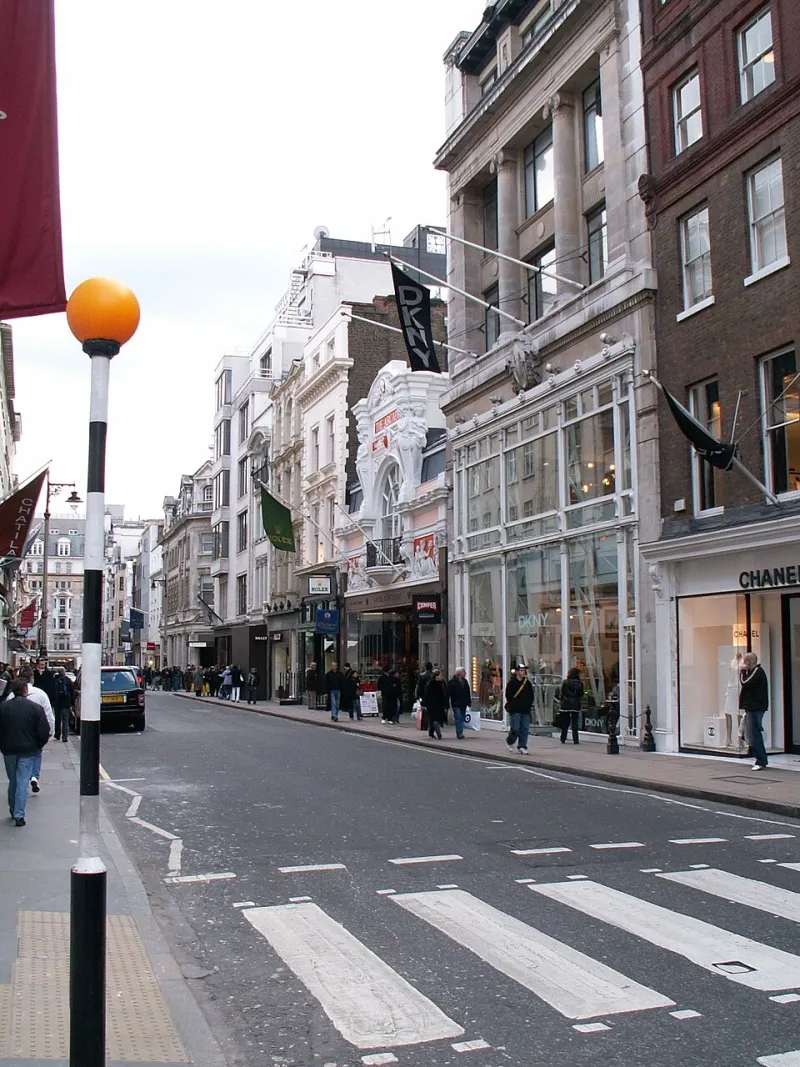
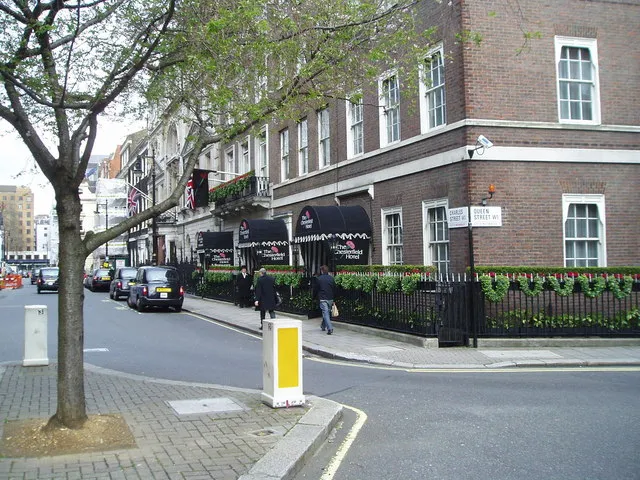
Counter Intelligence: The Quiet Reconfiguration of Bond Street’s Watch and Jewellery Floors

On Bond Street, the window still does the first piece of selling. But behind the vitrine, the ground floor is being re-planned. The authoritative shop floor is no longer a linear procession of display cases; it is becoming a sequence of rooms with different technical and privacy requirements. Authentication benches, service reception, private client suites and certified pre-owned areas are taking space that was once given over almost entirely to product. For occupiers, the change is about trust and client relationship management. For landlords, it is about whether the building can support a more demanding fit-out — and whether the rent can still be justified on the old arithmetic.
From display to diagnosis
The traditional luxury watch or jewellery store was arranged around sightlines. The customer entered, encountered the brand, and was guided towards a case or a seated consultation. That model has not disappeared, but it is being compressed. Brands now want ground-floor space for functions that were once relegated to basements, back offices or separate service centres: initial authentication, service intake, strap and bracelet fitting, valuation discussions and the handover of repaired pieces. Some of the technical work remains off-site or below stairs, but the client-facing parts of the process increasingly want daylight, a door and a degree of separation from the main sales floor.
The same is true of the pre-owned market. Certified pre-owned programmes have moved from the margins to the mainstream of watch retail, and they require their own geography: secure storage, traceability, insurance protocols and a clear distinction between new and pre-owned stock. A pre-owned counter placed awkwardly beside new product can confuse the customer and complicate stock control. Placed in a dedicated room, with its own access and seating, it becomes a distinct offer. The result is that a jewellery or watch unit now needs more internal walls, more doors and more controlled transitions than a conventional fashion flagship.
Technical fit-out as a leasing criterion
This has consequences at the negotiating table. A tenant fitting out an authentication or servicing area will ask for three-phase power, dedicated ventilation, humidity control, acoustic separation, secure data routes and robust storage. It will also ask for separate service access, goods-lift capacity and waste routing that does not cross the customer journey. Security requirements are more exacting: reinforced glazing, controlled entry, alarm zoning and, in some cases, safe rooms or enhanced structural measures. These are not standard specifications in older Mayfair buildings, many of which have listed facades, narrow floorplates and constrained servicing.
Landlords who can demonstrate technical capacity therefore have a quieter advantage than the headline rent suggests. The ability to provide a fit-out-ready shell — or to consent to tenant works without prolonged negotiation — can shorten void periods and attract covenants that would otherwise look elsewhere. Equally, buildings that cannot support these requirements may find that watch and jewellery occupiers negotiate harder, seek capital contributions or decline upper-floor expansion altogether.
Reconsidering rent per square foot
Retail rent on Bond Street has traditionally been discussed in terms of frontage, zone A and sales density. Those measures still matter, but they sit awkwardly alongside a unit where a meaningful proportion of the ground floor is devoted to non-selling or low-density functions. If a private client suite, an authentication room and a service reception occupy space that was once pure display, the occupier will argue that the commercial value of that area is different. Landlords may respond by accepting a lower headline rent in exchange for a longer lease, a strong covenant and a substantial tenant fit-out contribution.
The trade-off is not necessarily a concession. Income durability has become more valuable in prime London, and a jewellery or watch flagship with a long lease and a serious capital investment in the unit can be a more defensive asset than a shorter, fashion-led letting. But the lease must reflect the reality of the fit-out: landlord’s works obligations, service-charge treatment, reinstatement provisions and the allocation of plant and equipment all need careful drafting. The rent per square foot remains a useful shorthand, but it is no longer the whole calculation.
Discreet access and the private client
The private client suite is the most visible expression of this shift, even though it is designed not to be visible at all. High-net-worth customers increasingly expect to enter, be seated and conclude a transaction without crossing a public sales floor. That may require a second entrance, a dedicated lift lobby, a valet drop-off arrangement or simply a well-controlled corridor. In a dense street with heritage constraints, such access is difficult to create and therefore valuable where it already exists.
For landlords, this is a specification issue as much as a leasing one. Discreet access affects security, circulation, service-charge allocation and even neighbouring tenant relationships. It also raises questions about how the building presents itself at street level. The shop window remains the public face, but the private door is becoming part of the premium.
The investment case
The long-term investment case for Bond Street jewellery and watch assets is strengthened by this technical and experiential clustering. A unit that can host authentication, servicing and private client functions is harder to replicate in a secondary location than a straightforward retail box. That gives the street a defensive moat, provided the buildings can keep pace with occupier requirements. The risk is over-specialisation: a fit-out designed for one brand’s servicing model may be costly to reverse. Landlords should therefore favour reversible interventions and retain flexibility in service routes and plant areas.
In 2026, the question for owners is not simply whether the vitrine is beautiful. It is whether the building can support what happens behind it — and whether the lease captures the value of that capability. The shop floor is being re-zoned, and the rent is following.