Atomisers and Amortisation: The Investment Case for Scent-Led Flagships on Bond Street
Fragrance has long been the profitable afterthought of luxury retail: a counter at the back of a department store, a concession beside the handbags, a gift wrapped in ribbon at Christmas. On and around Bond Street in 2026, that hierarchy is being reconsidered. Fragrance and beauty houses are taking larger, experience-led frontages, converting scent from an accessory category into the anchor of a flagship. The question for landlords and investors is whether this shift represents a durable new rent engine or a cyclical reallocation of floor space.
The evidence points to something more structural than a wave of temporary pop-ups. Requirements are moving towards units of roughly 2,000 to 4,000 sq ft, with room for consultation areas, refill stations, engraving services and spaces for seasonal gifting. Frontages are being treated as media assets rather than mere points of sale. For a street whose rental tone has been set by watch and jewellery salons, the arrival of scent-led flagships changes the tenant mix, the fit-out arithmetic and the risk profile of the income stream.
From counter to corridor
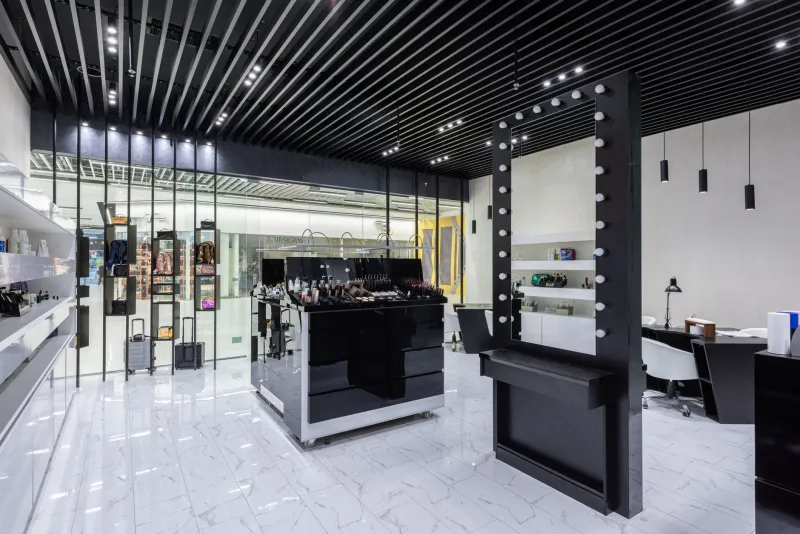
The modern fragrance flagship is not a perfume hall with a till at the end. It is a sequence of rooms designed to slow the customer down. The best schemes use lighting, temperature and ventilation to control how scent is experienced; they provide sinks, sampling stations and private consultation booths; they create a gifting area that can be reconfigured between seasons. That operational complexity explains why fragrance tenants now seek wider floorplates and greater servicing capacity than a conventional beauty concession would require.
This has consequences for landlords. A scent-led unit demands more mechanical and electrical work than a fashion boutique of similar size. Extraction, humidity control and plumbing for refill stations are not cosmetic additions. They affect service charge, plant space and the building's servicing strategy. In older Bond Street buildings, where rear accommodation and basement areas can be constrained, the practical fit between a fragrance operator and a heritage floorplate is rarely straightforward.
The fit-out bill and the landlord's share
Fit-out costs for a credible fragrance flagship can run into seven figures. Bespoke joinery, specialist lighting, ventilation and the engineering behind refill and sampling areas all carry a premium. The tenant bears most of that cost, but the landlord is increasingly expected to contribute. Capital contributions towards landlord works, rent-free periods and phased opening programmes have become standard negotiating items in prime London lettings.
For the investor, the key figure is not the headline rent but the net effective rent after capital expenditure and incentives. A fragrance flagship may sign at a lower headline rent than a watch or jewellery tenant of equivalent frontage, yet produce a more stable income profile because the occupational requirement is less dependent on the sale of high-value, low-frequency items. The trade-off is that the landlord may carry more of the initial capital burden and a longer period of uncertainty before the store reaches mature trading levels.
Lease structure and seasonal cash flow
Fragrance is a gifting business as much as a personal-use business. A flagship may generate a disproportionate share of annual sales in the final quarter, with further peaks around Valentine's Day and Mothering Sunday. That seasonality matters for lease structuring. Turnover rents, if used, must be calibrated to a trading pattern that is not evenly spread across the year. Rent deposits and guarantees must reflect the fact that a tenant's cash flow can be concentrated into a few intense weeks.
Covenant strength varies widely. A flagship operated by a listed luxury group or a large beauty conglomerate presents a different risk profile from a lease taken by an independent perfumer or a venture-backed niche brand. The former may accept a longer lease with fewer incentives but demand greater control over adjacencies and signage. The latter may bring energy and a distinctive customer base but require more landlord patience on rent-free periods and fit-out contributions. Investors should distinguish between the two rather than treating fragrance as a single occupational category.
Dwell time as a rent driver
The investment case for scent-led flagships rests partly on dwell time. A customer who enters to test a fragrance may stay for twenty minutes, return for a refill, attend a launch or book a consultation. That repeated visitation supports footfall on the street and helps neighbouring retailers. It also makes the frontage valuable as a branding medium. For a fragrance house, a Bond Street window is not simply a display of bottles; it is a stage for campaigns, seasonal installations and scent-led storytelling.
Compared with watch and jewellery, fragrance cannot match sales density per square foot at the top end. A single high jewellery sale can exceed the annual revenue of a modest perfume boutique. But watches and jewellery are low-frequency purchases, heavily dependent on tourist flows and high-net-worth confidence. Fragrance offers frequency, replenishment and a broader customer base. It is unlikely to replace watch and jewellery footfall outright, but it can complement it, filling mid-sized units and activating side streets that struggle to support high-ticket categories.
Can scent carry the rent?
The answer is conditional. Fragrance flagships can support prime rents where the lease is structured around realistic fit-out amortisation, transparent service charges and a tenant covenant capable of withstanding seasonal cash flow. They are less convincing as a substitute for the deepest luxury occupiers on Bond Street itself. The strongest investment case is diversification: a tenant mix that reduces reliance on a narrow group of watch and jewellery brands while adding visit frequency and experiential retail to the street.
For landlords, the discipline lies in pricing the capital contribution correctly and resisting the temptation to treat fragrance demand as a reason to underwrite aggressive rental growth. For investors, the opportunity lies in understanding that the rent engine is no longer only about the headline rent. It is about the fit-out, the service charge, the seasonality and the length of the customer relationship. Scent may not replace the watch salon as the anchor of Bond Street value, but it is becoming a meaningful part of the income story.