Above the Shop: The Valuation Case for Bond Street's Unexploited Upper Air

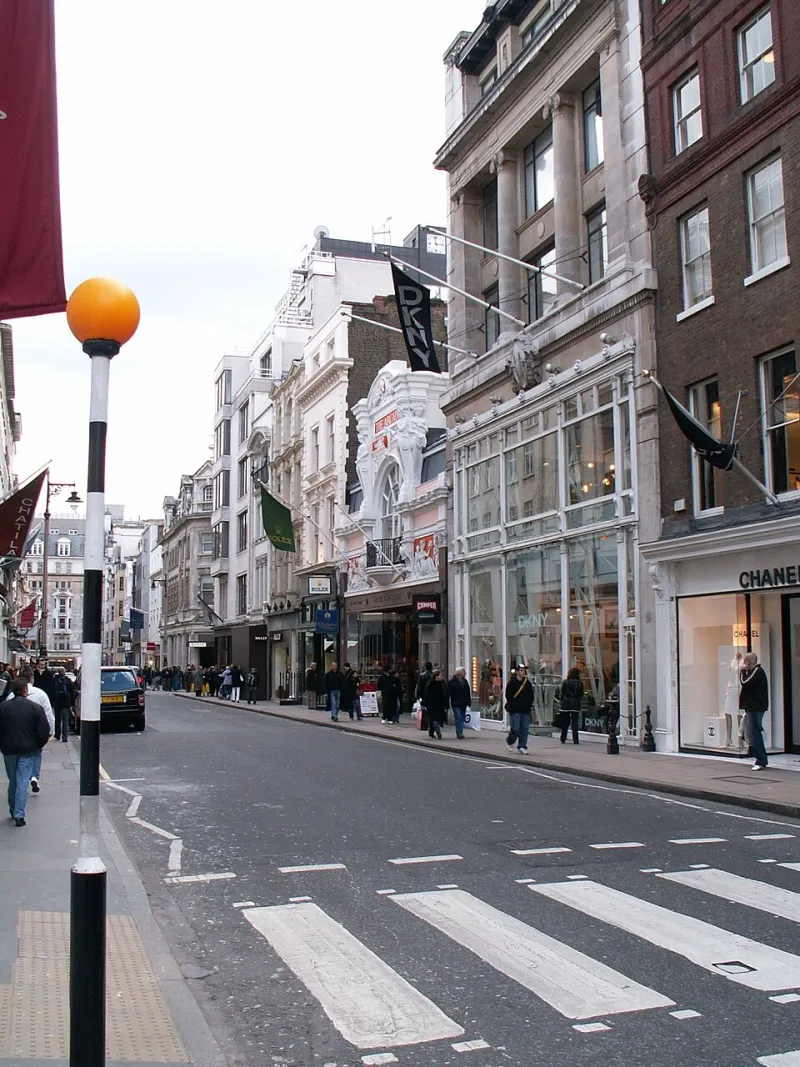
Photo: London Mayfair rooftop terrace view over Bond Street chimney pots, via i0.wp.com
The floor nobody has priced
For most of the past decade the Bond Street investment case has been told in a single dimension. Rent per square foot of ground-floor sales area, the length of the frontage, the depth of the basement and the quality of the corner determined the number. Upper floors were, by common consent, a servicing obligation: plant, storage, staff accommodation and the occasional office suite let at a fraction of the ground-floor tone.
That consensus is beginning to look complacent. As prime ground-floor rents across New Bond Street and Old Bond Street have flattened — not fallen, but ceased to deliver the annual increment that underwrote so many earlier business plans — attention has migrated upward. The question now being asked in acquisition committees, and increasingly at rent review, is a simple one: what is the air above the shop actually worth?
Planning is permissive in principle, particular in practice
Westminster's development plan is, in broad terms, sympathetic to upward extension in Mayfair, provided the result is subordinate to the host building and the townscape is unharmed. Set-back mansard and penthouse additions have become a familiar sight, and the authority's design guidance rewards restraint: interventions that read as roofscape rather than as a new storey.
The constraints, however, are cumulative. Much of Bond Street sits within the Mayfair conservation area, and a significant number of buildings are statutorily listed. Where permitted development rights for upward extension have been withdrawn — as they have across swathes of central London — a full planning application is required, bringing heritage, design and neighbour-consultation scrutiny. Rights of light, which in a street of this density are rarely theoretical, can cap an envelope before the planning committee ever sees it. The practical consequence is that the theoretical roof terrace is often a smaller, and more expensive, proposition than the initial feasibility sketch implies.
The structural arithmetic
Bond Street's building stock is a palimpsest. Eighteenth- and nineteenth-century masonry frames sit alongside inter-war steel and post-war concrete, frequently within the same terrace. Adding load at roof level requires an honest structural appraisal, and the answer is not always favourable: some buildings can carry a lightweight set-back storey with modest reinforcement, while others will need transfer structures that consume the very floor area the scheme was meant to create.
Servicing is the quieter obstacle. Lifts, escape stairs and risers must be extended; plant, already squeezed, often needs relocating rather than enlarging. The Building Safety Act 2022 has raised the bar for higher-risk buildings and sharpened the documentation expected at every stage. None of this is fatal, but each item erodes the margin between a headline rent and a deliverable return.
Hospitality is the test case
The most persuasive use case is not residential and not conventional office. It is hospitality: a restaurant or members' terrace with a view across the Mayfair roofs, which commands a premium that a fifth-floor office cannot. Operators have noticed. Several are now underwriting upper-floor space on the basis of covers per day rather than desks per square foot, and the rent they will pay is derived from a trading projection rather than a comparable.
That is precisely why landlords should treat the category with discipline. Roof terraces are seasonal, weather-dependent and subject to noise and odour conditions that Westminster enforces conscientiously. A tenant whose model depends on 120 covers a day in July will want a rent structure that reflects January. Turnover rents, with a base and a participation clause, are an obvious fit — and, as with ground-floor lettings, they transfer part of the trading risk back to the owner.
How the valuers are treating it
Investment agents have begun to apply a separate capitalisation to consented, income-producing roof space rather than rolling it into the headline yield. That is sensible. A terrace let on a 15-year lease to a credible operator is a different asset from an unconverted loft, and the market is slowly learning to price the difference.
The more delicate issue is hope value. A building with a feasible, consented scheme is worth more than one without; a building with a scheme that has been refused twice is worth less than the vendor's brochure suggests. Purchasers would do well to commission their own planning and structural diligence rather than relying on a vendor's feasibility study, however elegantly drawn.
What the buyer should actually check
Four questions repay attention. First, is the freeholder's consent to alter — where the building is held leasehold — obtainable on terms that do not swallow the profit? Second, what does the existing service charge regime say about apportionment of a new roof-level unit? Third, has the rights-of-light position been tested by a specialist rather than asserted by an architect? And fourth, is there a realistic occupational market, or merely an attractive render?
Bond Street's roofscape will not rescue a portfolio. But at a moment when the ground floor is fully priced and the basement is fully exploited, it is the one part of the building where a well-advised owner can still create rather than merely capture value. The dividend is real; it is simply not automatic.