Second Time Around: Why Resale Deserves a Place on the Prime Pitch

Photo: luxury pre-owned handbags authentication boutique interior London, via modeneseinteriors.com
The stigma is ageing
There was a time, not so long ago, when a resale operator inquiring after a Bond Street unit would be met with a polite but firm deflection. The category was associated with the wrong sort of footfall: bargain hunters, grey-market stock and a clientele that might not convert into full-price purchasers of the brands next door. Landlords with a portfolio of luxury covenants had little incentive to test the proposition.
The proposition has since changed. Resale is now a structured, technology-enabled and increasingly well-capitalised industry. Authentication is a service in its own right; provenance is documented; pricing is transparent. The largest platforms have become recognisable brands, and the customers they serve are, by and large, the same customers who buy new-season product a few doors along.
What resale operators actually need from a lease
It is a mistake to assume that a resale tenant wants the same terms as a fashion house. The space requirement is often smaller and more flexible; the fit-out is lighter; the sales cycle is less seasonal but more dependent on stock flow. What matters most is delivery access, secure storage, and a lease that permits a click-and-collect and authentication service as well as simple retail.
Rents tend to be achievable rather than headline, which is precisely why some landlords have resisted. But a well-let smaller unit at a sustainable rent is worth more, on a risk-adjusted basis, than an empty flagship held for a covenant that may never arrive. The vacancy cost on Bond Street — service charge, insurance, business rates and the intangible erosion of a pitch that looks unloved — is not trivial.
The credibility argument
There is a subtler point. A resale presence signals that a street is confident enough to accommodate the full lifecycle of luxury, rather than only its first sale. That is a more sophisticated proposition than the traditional mono-brand model, and it appeals to a customer who is increasingly comfortable moving between new and pre-owned.
It also addresses a genuine commercial problem. The luxury market has spent a decade expanding supply and raising prices; the secondary market absorbs some of that stock and keeps it in circulation. A street that hosts both ends of the cycle is, in a modest way, more resilient than one that hosts only the first. Footfall follows interest, and interest in provenance has rarely been higher.
The counter-argument, fairly stated
None of this is uncontroversial. Some landlords will continue to regard resale as a dilution of the pitch, and there are units and locations where that view is defensible. The risk of counterfeits is real, and a tenant without robust authentication processes can damage a street's reputation as surely as it can enhance it. The answer is not to exclude the category but to underwrite it properly: covenant strength, operational track record, and a lease that gives the landlord the ability to act if standards slip.
A category, not a concession
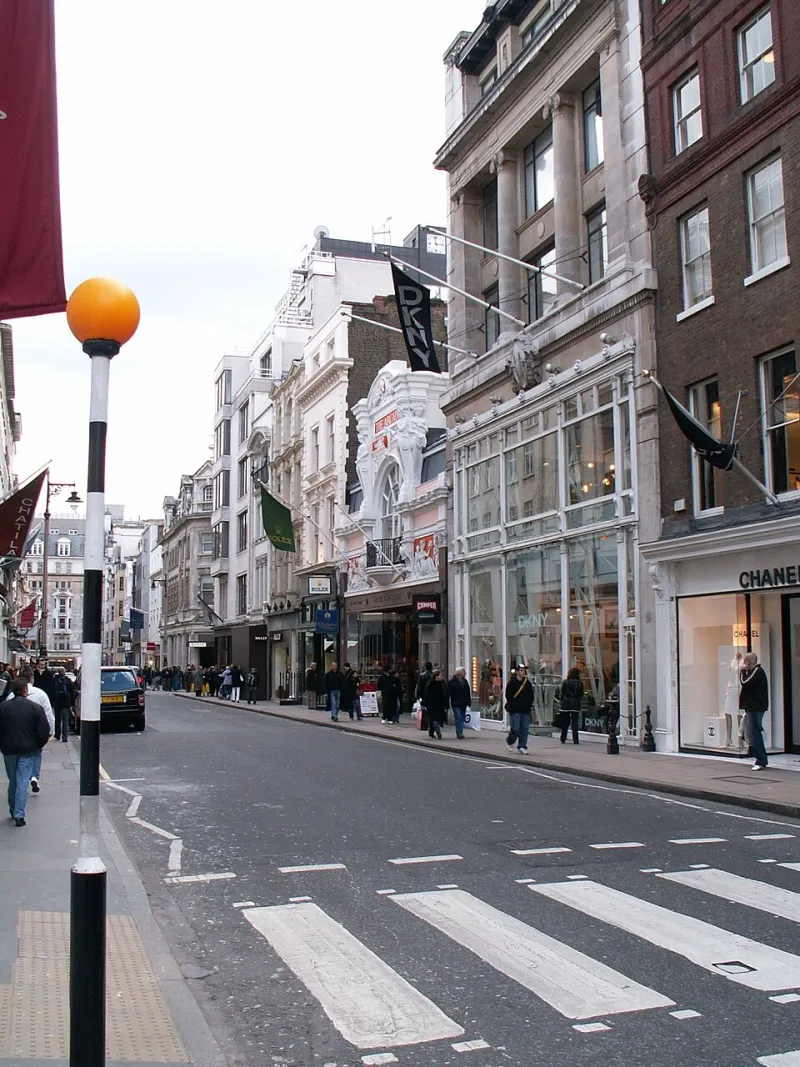
The most likely outcome is not a wave of resale flagships on New Bond Street. It is a gradual, selective presence: a handful of well-operated units on secondary pitches and upper floors, a few concessions within established stores, and a growing service layer of authentication and restoration businesses taking small-format space.
That is how most categories mature on Bond Street. They arrive at the edges, prove their footfall, and move toward the centre. Resale is at the edge now. The landlords who engage with it early will have the better pick of the tenants, and the better story to tell about what a modern luxury street is for.