The Retrofitted Yield: Why Carbon Risk Is Now Part of Bond Street’s Valuation

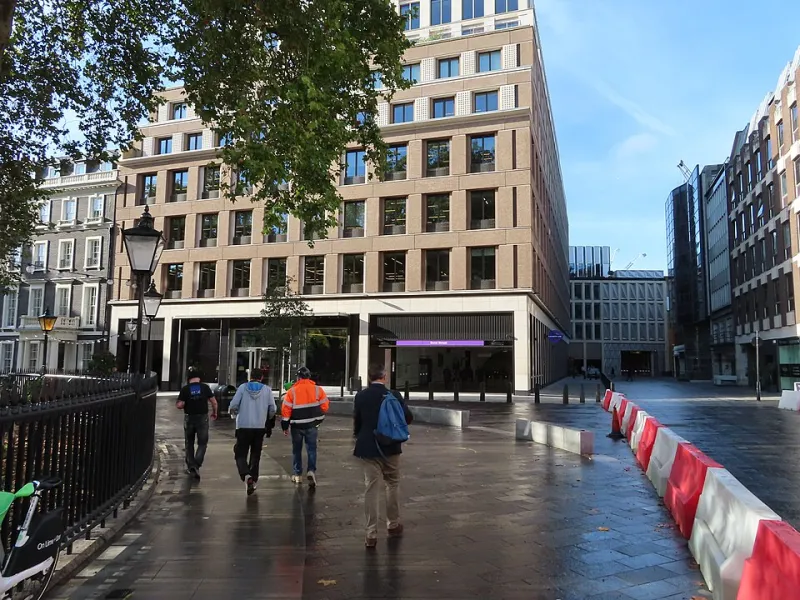
Photo: Garry Knight, CC BY 2.0, via Wikimedia Commons
For decades, the investment case for Bond Street’s heritage stock rested on scarcity, address and frontage. Stone was a store of value. In 2026, that assumption is being tested by a quieter force: the cost and uncertainty of retrofitting buildings that were never designed for modern energy-performance standards. Carbon risk is no longer a sustainability department concern. It is entering the underwriting model, the lease negotiation and the yield.
The heritage premium meets the retrofit discount
Prime Mayfair and Bond Street contain some of London’s most constrained building stock. Many properties are listed, sit within conservation areas or possess interiors and façades that cannot be altered without consent. Improving energy performance in such buildings is not a simple matter of replacing glazing or installing heat pumps. It requires consent, specialist contractors, phased works and, often, a willingness to absorb disruption in a market where ground-floor trading space is among the most valuable in the UK.
The tension is straightforward. A landlord may face capital expenditure that is difficult to recover through the service charge, particularly where works benefit the whole building rather than an individual occupier. An occupier may face higher outgoings or operational disruption during works. An investor must decide whether the resulting risk is priced correctly. The market’s early response is visible in the widening gap between buildings with a credible retrofit pathway and those without one.
That gap does not always appear as a lower headline rent. Prime rents are sticky, and landlords are reluctant to advertise weakness. Instead, the adjustment emerges in rent-free periods, capital contributions, turnover-rent structures and the length of lease commitments. In effect, the market is repricing carbon risk through the terms rather than the quotation.
Policy direction, not policy certainty
The regulatory backdrop remains a work in progress. Since 2018, commercial property has been subject to minimum energy efficiency requirements, and the direction of travel is clearly toward tighter standards. Government consultation has repeatedly examined raising the minimum EPC threshold for commercial buildings, with EPC B discussed as a long-term ambition for the end of the decade. For owners of older stock, the precise timetable matters less than the trajectory. A building that cannot realistically reach a higher rating is now a building with a shorter institutional shelf life.
This is particularly acute on Bond Street because so much of the stock is either listed or within a sensitive historic context. The cost of a retrofit is not merely the cost of equipment. It includes professional fees, planning and listed-building consent, structural investigation, temporary works and the opportunity cost of interrupted occupation. Those costs can be estimated, but the consent risk is harder to price. That uncertainty is precisely what investors dislike.
How the lease is absorbing the risk
Green lease clauses are becoming more common, though their form varies widely. Some landlords seek occupier cooperation on energy data and works; others seek to recover retrofit expenditure through service charges or separate contributions. Occupiers, particularly retailers with thin margins and strict fit-out requirements, are pushing back. The negotiation increasingly turns on who bears the cost of a building’s transition and how that cost is shared over time.
For landlords, the commercial logic is to preserve the asset’s liquidity. A building that cannot be let or sold without a credible retrofit plan is a depreciating asset, regardless of its address. For occupiers, the logic is to avoid inheriting an open-ended liability. The result is a more forensic approach to lease drafting, with clearer provisions on data sharing, works coordination and cost allocation.
The smartest capital is treating these clauses as pricing signals. A lease that places uncapped retrofit risk on the occupier may support a higher headline rent in the short term but reduce the pool of viable tenants. A lease that places all risk on the landlord may depress the yield until the works are complete. The market is searching for a middle ground, and that search is itself a source of value.
The investor’s new diligence
Institutional buyers are now asking questions that would have seemed niche a decade ago. What is the building’s current EPC rating and what is the realistic pathway to improvement? Are there listed-building constraints that make certain technologies unviable? What is the condition of the building services and how much of the retrofit can be staged? What lease events create an opportunity to carry out works without compensating occupiers?
These questions are beginning to affect pricing. A prime Bond Street asset with a clear, costed retrofit plan can still command aggressive pricing because it offers certainty. An asset with an unresolved carbon question may trade at a discount, or not trade at all. The discount is not a judgement on the building’s architectural merit. It is a judgement on the cost and risk of bringing it into line with a changing standard.
Stone, standards and the long hold
Bond Street’s stone will remain its signature. But the value of that stone is increasingly inseparable from what sits behind it: the building services, the insulation, the glazing, the roof and the energy strategy. Owners who treat retrofit as a compliance afterthought will find themselves negotiating from a weaker position. Those who treat it as part of the investment case will be better placed to defend rents, preserve liquidity and attract occupiers who value certainty as much as address.
The carbon clause is not a single clause. It is a new lens through which the market is reading prime London property. On Bond Street, where heritage and value are so tightly bound together, that lens is already changing the price of permanence.