The Membership Anchor: Private Clubs and the Re-pricing of Mayfair's Retail Edges
For much of the past decade, the conversation about Mayfair's retail edges has been conducted in the language of frontage: how many metres, which corner, how the window reads from the pavement. That vocabulary still matters, but it no longer describes the whole transaction. A growing number of private members' clubs are taking space on and around Bond Street, and they are doing so in a way that separates the commercial value of a ground-floor address from the operational value of the floors above it. The result is a tenant category that behaves unlike either a retailer or an office occupier, and a set of lease and planning questions that landlords are only now beginning to standardise.
A tenant that uses the street differently
The conventional retailer rents a shop and treats the pavement as a funnel. The club rents a building and treats the pavement as a signal. Members arrive by appointment, by car or on foot at controlled hours; they do not browse, and they rarely spill into neighbouring units in the way a busy retail pitch expects. What they do bring is repeatable, high-value dwell time inside the building — a dining room, a gym, a library, a few bedrooms — and a frontage that functions as a calling card rather than a shop window.
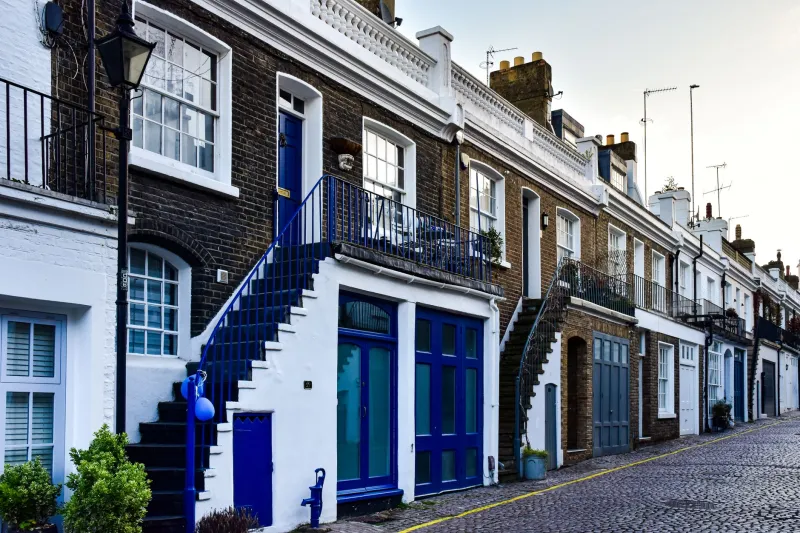
That distinction matters for the side streets. On Dover Street, Albemarle Street and the quieter stretches running off Berkeley Square, a club can occupy a townhouse that would be awkward for a fashion tenant: narrow floorplates, constrained servicing, listed interiors. The club absorbs the inefficiency and pays for the address. The ground floor is retained as an entrance and a piece of brand theatre; the upper floors do the commercial work.
Footfall, but not as retail counts it
Landlords have learned to be sceptical of footfall claims that cannot be reconciled with trading patterns. A club does not generate the kind of passing trade that supports a neighbouring café at lunchtime, and its members may arrive when surrounding shops are shutting. The benefit is subtler: a well-run club raises the evening and weekend presence of a street, improves the perception of security, and gives a pitch a reason to be visited rather than merely passed through.
There is also a reverse effect that is harder to underwrite. Where clubs cluster, the street can acquire a private, almost residential character that suits some occupiers and deters others. A luxury brand seeking visibility may welcome the company; a mid-market operator relying on volume may not. The net effect on neighbouring rents appears to depend less on the club itself than on the balance of uses along the parade.
The lease mechanics of a membership covenant
From an investment perspective, the appeal is straightforward. Clubs tend to take longer leases than retailers, invest heavily in fit-out, and value continuity of occupation. For a landlord with a building that has struggled to let as retail, that is a credible answer to void risk. The trade-off is that the covenant is unusual. Rental evidence is thin, turnover rents are largely irrelevant, and the tenant's ability to pay depends on membership income rather than sales density.
Service charges require particular attention. Clubs run plant, kitchens, pools and late-hours operations, and the apportionment of costs across mixed buildings can become contentious where a retail unit sits beneath a members' floor. Dilapidations and reinstatement obligations also need to be drafted with care, because a club's fit-out is often more invasive than a shop's. Landlords are increasingly treating the membership covenant as its own underwriting category, with its own diligence checklist, rather than as a variant of leisure.
Planning and the sui generis question
Planning is where the category carries the most visible risk. Westminster City Council has long taken a close interest in the balance of uses in Mayfair, and club use sits awkwardly against the retail classifications that have shaped the street scene. Questions of hours, licensable activity, deliveries, plant noise and the intensity of occupation all arise, and neighbouring occupiers are not shy about making representations.
For an investor, the practical consequence is that planning risk must be priced rather than assumed away. A consent that permits a members' club is not the same asset as a consent that permits a shop, and the difference can affect exit liquidity even where the income is secure. The strongest propositions tend to be those where the use is already established, the building's history supports it, and the ground floor retains a genuinely public-facing quality.
Can a club anchor a pitch?
Anchor tenants are usually understood to drive footfall to the benefit of those around them. Clubs do not do that in the traditional sense. What they can do is stabilise a building, extend the active day, and lend a side street a sense of purpose that a run of short lets cannot. Whether that constitutes an anchor is a matter of definition, but it is increasingly the question landlords ask when a retail letting stalls.
The prudent conclusion is not that clubs are replacing retail on Bond Street's edges. They are not. They are filling the spaces that retail has become less able to use, and in doing so they are changing the terms on which the remaining retail is valued. The landlords who fare best will be those who underwrite the covenant rather than the category, and who recognise that on Mayfair's side streets the address is now doing two jobs at once.