Brushwork and Balance Sheets: The Art Trade's Growing Claim on Bond Street Ground Floors
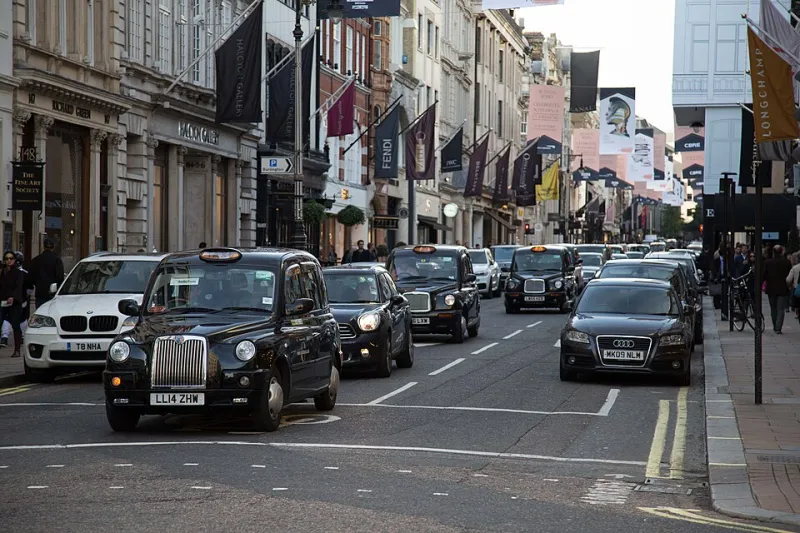
The prevailing narrative around Bond Street concerns consolidation: fewer flagships, larger floorplates and a relentless reordering of the luxury retail hierarchy. Yet a quieter group of occupiers has been steadily extending its claim on ground-floor space in Mayfair and St James's. Commercial galleries, private dealers and auction houses are not replacing the luxury flagship, nor are they seeking to. They are supplying something that prime London increasingly needs: a stable, culturally credible form of occupation that supports footfall without demanding the same trading densities as fashion or jewellery.
A Different Kind of Covenant
Art dealers are unusual tenants. Their businesses are capital-intensive, relationship-led and often privately held. Many have operated in the same family or partnership for decades, and their balance sheets are frequently stronger than their trading profiles suggest. For a landlord, that combination can be attractive. A gallery may not generate the turnover of a global fashion house, but it can offer a dependable covenant, a discreet client base and a programming calendar that brings people to a street outside conventional shopping hours.
The commercial logic is not purely defensive. Bond Street's art trade has long been intertwined with its luxury retail identity. Cork Street's galleries and the auction rooms of St James's have historically provided a cultural hinterland for Mayfair, and the presence of major dealers around Bond Street reinforces the district's claim to be a centre of taste-making rather than merely transaction. In 2026, as some retail categories reassess their physical footprints, that cultural hinterland is becoming a more explicit part of the tenant mix.
The Lease as Curatorial Instrument
What distinguishes galleries from conventional retail occupiers is not simply their use of space but their approach to the lease. Art dealers tend to favour flexibility over frontage maximisation. Shorter terms with extension options, break clauses and agreed fit-out contributions are common. So too are arrangements that allow the tenant to host private views, talks and evening events without triggering restrictive user clauses.
For landlords, these preferences require a different underwriting approach. A gallery may accept a less prominent entrance in return for better servicing, secure loading and climate control. It may prefer a smaller ground-floor showroom with significant ancillary space at lower level, where storage and viewing rooms can be accommodated away from the public eye. This is not a conventional retail covenant, and it should not be valued as one. The effective rent, incentive package and lease flexibility all matter more than the headline rent per square foot.
That distinction is important when reading prime London rental values. Headline rents in Bond Street and its immediate surrounds continue to attract attention, but the more revealing data lies in net effective rents after incentives. Galleries often negotiate modest base rents in exchange for longer commitments to programming, fit-out quality and building profile. The result can be a lower starting rent but a more stable income stream and a stronger cultural association for the asset.
Programming as Footfall Infrastructure
Galleries are not passive occupiers. Their exhibition programmes create recurring reasons for clients, collectors and the merely curious to visit. Private views and evening openings can animate a street at hours when retail footfall might otherwise fall away. Auction houses add a further layer, with previews and sales drawing international collectors into Mayfair for short, intense periods.
This matters for neighbouring occupiers. A gallery does not compete with a luxury boutique for the same spend, but it can complement it. The collector visiting a Bond Street exhibition may also visit a jeweller, a tailor or a restaurant. The cultural calendar therefore functions as a form of soft infrastructure, supporting the district's wider hospitality and retail ecology without requiring the same marketing spend as a flagship launch.
There are limits. Art galleries are not a universal solution to vacancy, and they should not be treated as such. The art market is cyclical, and discretionary spending on art can contract sharply when confidence weakens. Security, insurance and servicing requirements can be demanding. Some buildings are simply unsuitable. Nor should flexible leases be used to disguise weak demand; transparency in lease data remains essential if the market is to read values accurately.
The Valuation Read-Across
The contrarian signal is this: the art trade's willingness to commit to Bond Street ground floors suggests that prime London value is not solely a function of retail sales density. It is also a function of resilience, cultural capital and the ability to attract a clientele that values discretion over display. For investors, that argues for a more nuanced approach to tenant mix and income durability. A gallery covenant may not set a new headline rent, but it can reduce void risk, support neighbouring lettings and enhance the long-term identity of an asset.
In 2026, the art trade is not the loudest occupant on Bond Street. It may, however, be one of the most stabilising. The galleries and auction houses expanding around the district are not a passing curiosity. They are a reminder that prime London property has always been sustained by more than shopping alone: by institutions, by taste and by the quiet capital that follows both.